
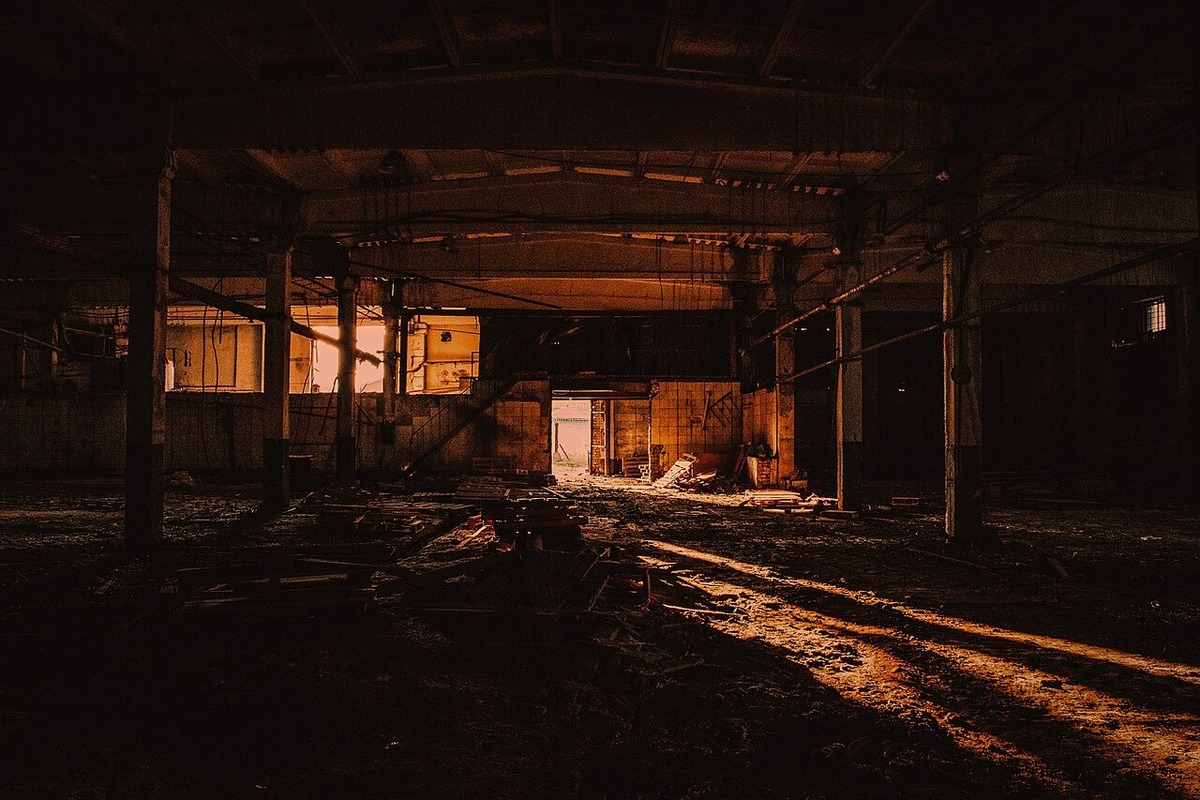
Abandoned factory urbex is one of the most rewarding parts of urban exploration because industrial sites preserve scale, machinery, worker routes and local economic history in one place. It is also one of the easiest categories to misjudge.
A factory that looks empty can still be owned, monitored, partly active, contaminated or structurally unsafe. The right method is not to chase a dramatic photo first. It is to research the site, verify its current status, understand the industrial risks, and only consider lawful, preservation-first exploration. If you are still building a route, compare the USA urbex maps by state, browse the urbex map shop, and keep the legal filter from Is Urban Exploration Legal? open before making plans.
Why factories are different from houses or schools
Industrial ruins are not just bigger abandoned buildings. They were designed around production: raw materials entered, workers moved through defined zones, machines transformed goods, and finished products left by rail, truck, canal or port. That system is what makes a factory interesting, but it also multiplies the hazards.
| Factory zone | What it can reveal | Main caution |
|---|---|---|
| Production halls | Columns, machinery bases, overhead light, work flow | Weak floors, falling roof panels, debris |
| Loading bays | Rail links, dock doors, logistics layout | Open drops, vehicle movement, active reuse |
| Utility rooms | Boilers, pumps, electrical traces, pipework | Confined spaces, contamination, live services |
| Offices and labs | Company names, dates, records, worker history | Privacy issues, broken glass, unsecured stairwells |
The research workflow before any visit
Good factory research starts away from the fence. Look for the old company name, production type, closure date and current owner before you judge access. A short local-news article about bankruptcy, redevelopment or fire damage can be more useful than ten outdated photos.
Factory research checklist
- Confirm the site still exists: compare satellite view, street-level imagery and recent photos, because industrial land is often cleared fast.
- Identify current use: many “abandoned” plants are now storage yards, filming locations, redevelopment zones or guarded brownfield sites.
- Check legal status: ownership, fencing, signage and local trespass rules matter more than whether a door is open.
- Look for contamination signals: chemical production, metal works, power generation and asbestos-era construction need extra caution.
- Build a route plan: note public viewpoints, daylight windows, parking, exits and backup options without publishing sensitive access details.
Common factory types and what to expect
Not all abandoned industrial sites behave the same way. A textile mill, food plant, foundry and power station may all look like factory urbex online, but the risk profile and research value are different.
- Textile mills: often strong for brick architecture, repeated windows and local labor history, but old timber floors can be unreliable after water damage.
- Food and packaging plants: may have recognisable production rooms and offices, but can also attract pests, mold and slippery surfaces.
- Foundries and metal works: visually powerful, with heavy bases and gantries, yet higher risk from sharp metal, pits, dust and unstable platforms.
- Power and utility sites: excellent for technical heritage, but rarely casual exploration because of contamination, live infrastructure questions and restricted areas.
- Warehouses and depots: simpler layouts for photography, though loading docks, mezzanines and partial reuse can create hidden risks.
Safety decisions that matter more than gear
Gear helps, but judgment comes first. Boots, gloves, a headlamp and a respirator do not make an unsafe factory safe. They only reduce small, predictable risks. If you see active demolition, chemical containers, failing roofs, waterlogged basements or sealed utility rooms, the smart decision is to leave the site alone.
For a practical packing baseline, use the urbex gear checklist. For industrial sites, add stricter thresholds: avoid solo visits, avoid climbing, avoid roofs, avoid confined spaces, and do not cross barriers or force access. Factory urbex should never become a test of bravery.
Planning routes without exposing locations
Factories often sit near rail corridors, canals, ports, old worker housing and warehouse belts. That makes map planning useful, but it also makes careless sharing risky. Publicly posting exact entry points can accelerate vandalism, theft and closure. Keep sensitive details private and share history, preservation context and photos instead.
A clean route plan should separate research from access. Use map layers to understand clusters, travel time and public viewpoints. Use current records to decide whether a site is still relevant. If you need a structured workflow for coordinates and layers, pair this guide with the Google Earth KML urbex map guide.
Browse verified urbex maps before building a factory route
Filter abandoned places by region, keep your research organised, and avoid relying on old forum rumors.
Beginner-friendly vs advanced factory urbex
Beginners should not start with a vast steelworks, chemical plant or multi-storey power station. A smaller warehouse, mill exterior, legal heritage site or guided industrial museum can teach the same observation skills with fewer unknowns. Advanced explorers are not defined by taking more risks; they are defined by knowing when not to enter.
A useful rule is simple: if you cannot explain the site’s current status, main hazards, lawful access situation and exit plan in a few sentences, the location is not ready for a visit.
FAQ: abandoned factory urbex
Is abandoned factory urbex legal?
Not automatically. A factory can be vacant and still be private property, publicly controlled, under redevelopment or protected by safety restrictions. Research from public sources is different from entering a site. If you do not have a legal basis or permission, stay out.
What makes abandoned factories dangerous?
The biggest risks are structural decay, missing floors, open pits, unstable stairs, asbestos, chemical residue, sharp metal, poor air quality and active security. Industrial sites can also contain hidden services or partial reuse that is not obvious from old photos.
How do you find abandoned factories responsibly?
Start with former industrial districts, old company names, satellite imagery, local archives, planning records and recent news. Then verify whether the site still exists, who owns it, whether access is lawful, and whether conditions are safe enough to continue researching.
Should you publish exact factory locations?
Usually not in public detail. Sharing exact access points can increase vandalism, theft and security problems. Responsible documentation focuses on history, preservation and imagery rather than instructions for entering a sensitive place.
Final planning rule
Abandoned factory urbex is strongest when it is treated as research, not impulse. Build the context first, verify current status, respect closures, avoid forced entry and keep your route notes private. The best industrial explorations are the ones where the site remains intact after you leave.