
Abandoned train station urbex covers more than a silent platform. Former passenger stations, depots, signal boxes, workshops, freight yards and branch lines each leave different clues, and each can carry a different legal and safety profile.
This guide is for research, photography and responsible planning—not for trespassing or walking along railway infrastructure. Pair it with the urban exploration legality guide, the urbex gear checklist and the Google Earth KML guide.
What counts as an abandoned railway site?
A former station may be a closed passenger building, a rural halt, a freight platform, a maintenance depot or a railway structure that has been disconnected from service. Some are genuinely derelict; others have become homes, museums, storage spaces, public paths or redevelopment sites.
| Site type | Useful clue | First responsible check |
|---|---|---|
| Station hall | Platforms, ticket windows, signs and waiting rooms | Ownership, current use and public access |
| Depot or workshop | Large sheds, pits, loading areas and service tracks | Private rail land, contamination and active connections |
| Signal box | Elevated control room beside a junction or former line | Electrical systems, stairs and heritage restrictions |
| Former branch line | Track bed, embankment, bridge piers or station house | Whether any section remains active or privately maintained |
How to verify a station before planning around it
Start with the historical name, not a modern pin alone. Compare old railway maps, timetables, local archives and historical photographs with current satellite imagery and recent public information. A station can be renamed, demolished, converted or absorbed into a larger redevelopment project.
Railway research checklist
- Record the historic station name, municipality and former line.
- Compare archival maps with current satellite and street-level context.
- Check recent demolition, heritage, planning or redevelopment notices.
- Separate an official museum, public trail or tour from a restricted building.
- Save the date of your last reliable status check.
Why railway urbex has unusual hazards
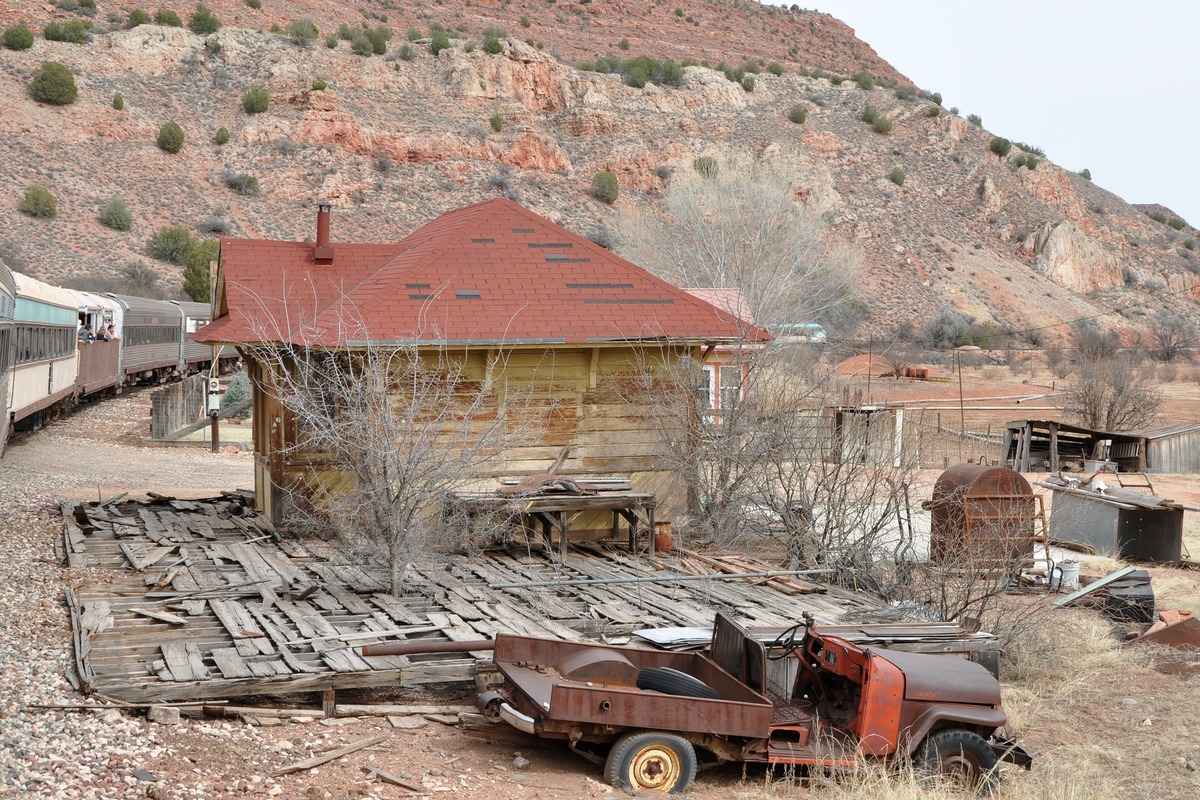
Rust and vegetation do not prove that a railway is inactive or safe. Adjacent tracks may remain operational, electrical equipment may still be present, and platforms, roofs, stairs or inspection pits can fail without warning. Old stations may also contain asbestos, oils, broken glass, poor air or hidden drops.
Non-negotiable safety filters
- Never assume an overgrown rail is disconnected or safe to walk.
- Avoid active lines, electrified systems, tunnels, roofs, bridges and inspection pits.
- Do not force gates, doors or fences, and do not publish weak points or security routines.
- Leave immediately if the site is occupied, monitored, fenced or clearly prohibited.
- Prefer an official tour, public viewpoint, heritage site or permission-based visit.
What to save in a map or KML entry
A useful railway map entry should preserve context rather than just a coordinate. Note the station name, former line, last verified date, ownership type, current use, demolition or preservation status, nearby active rail, official access options and a confidence level. Keep sensitive access details private.
Simple KML status labels
- Green: official public access, museum, trail or permission-based visit.
- Yellow: status unclear, historic evidence conflicts with recent information or ownership changed.
- Red: active rail nearby, restricted land, fresh security, unstable structures or dangerous infrastructure.
- Grey: demolished, converted, sealed or no longer relevant to route planning.
Photography without turning a railway into an access map
Railway photography works well because it combines long perspective lines, faded typography, platforms, signal hardware and the contrast between transport history and vegetation. Focus on atmosphere, architecture and documented history. Avoid showing entry points, fence weaknesses, security patterns or exact details that could encourage trespass.
Where a former station has been preserved or reused, an official visit can produce stronger photographs and better historical context than a risky interior attempt. A closed building is still a property, even when the last train left years ago.
Plan cleaner abandoned-place research
FAQ: abandoned train station urbex
Are abandoned railway tracks always inactive?
No. A line may be operational, reserved, privately maintained or connected to an active corridor even when it looks overgrown. Never step onto tracks without explicit authorization.
Is abandoned train station urbex suitable for beginners?
Railway sites are not automatically beginner-friendly because they combine legal uncertainty, active infrastructure, unstable structures and hidden pits. Start with public viewpoints, heritage sites or guided access.
How can I tell whether a station still exists?
Match the historic name to the municipality, compare old maps with current imagery, then check recent local, planning or heritage information. Many famous stations have been reused or demolished.
Should I publish exact coordinates?
For restricted or vulnerable sites, avoid publishing exact coordinates, access points, fence weaknesses or security details. Public heritage sites and official visitor information are different.
Final thought
Abandoned stations preserve the story of how people, goods and towns once moved. The best railway urbex research combines historical curiosity with current verification: document the place, respect ownership, stay away from active infrastructure and choose legal viewpoints whenever possible.