
Abandoned amusement park urbex is different from exploring a warehouse, church or hospital. Closed theme parks are built around public movement, elevated rides, water systems, ticket buildings, food courts and backstage service zones, so the risks and research signals are specific.
This guide focuses on responsible planning, not entry points. Use it with the urban exploration legality guide, the urbex gear checklist and the Google Earth KML guide before adding any closed theme park to a route.
Why closed theme parks need extra status checks
A park can look abandoned in photos while still being owned, patrolled, prepared for redevelopment, partly reopened for events, or already demolished. Famous places change especially fast because videos, maps and social posts increase pressure on the site. Always treat old urbex reports as historical evidence, not current permission.
| Research signal | What it can mean | Responsible check |
|---|---|---|
| Rides still standing | Preserved ruin, delayed demolition or active redevelopment | Check planning records, owner updates and recent local news |
| Fresh fencing or cameras | Security response, insurance control or contractor work | Do not rely on older access reports |
| Seasonal events nearby | Partial reopening, tours, film use or private event space | Separate official areas from restricted backstage zones |
| Overgrown paths | Low maintenance, hidden drainage and uneven surfaces | Plan from public viewpoints first, not assumptions |
Ride and water-park hazards to filter before visiting
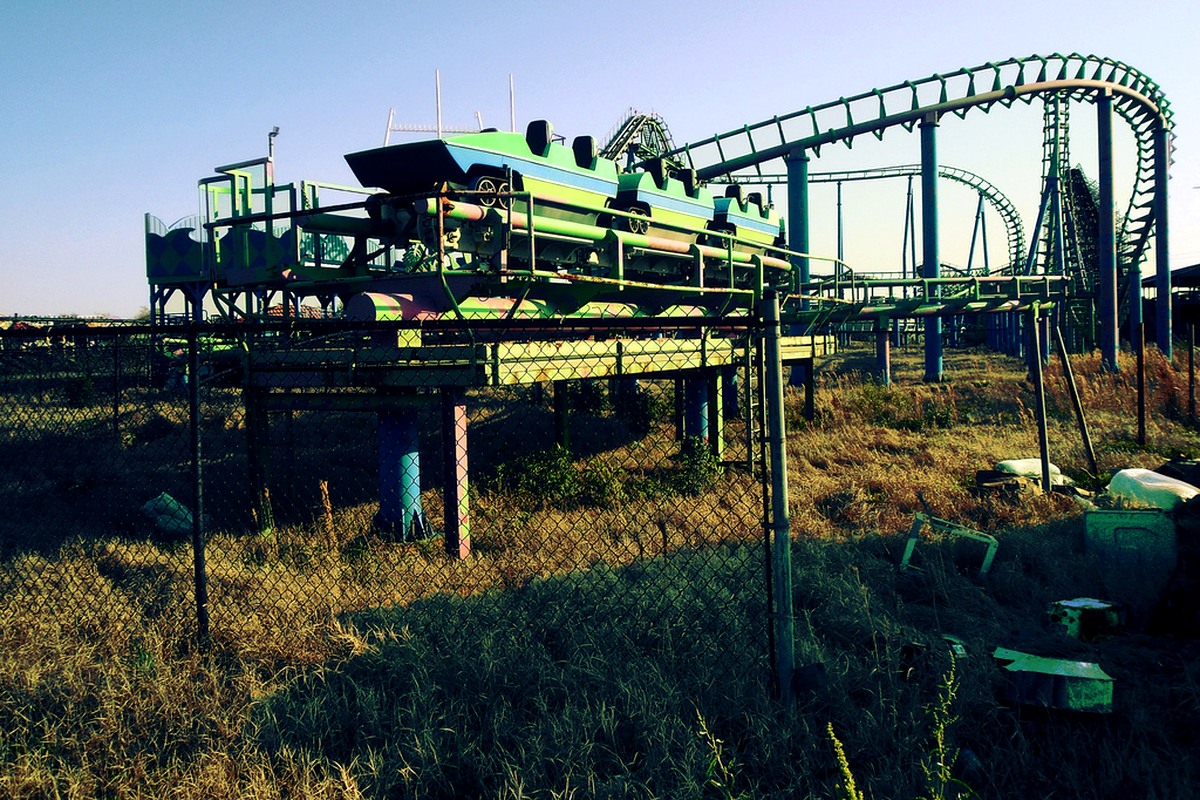
Amusement parks decay in ways that are easy to underestimate. A roller coaster track may look solid from a distance while platforms, catwalks and stairs are rusted. Water rides can hide deep pits, stagnant water, algae, broken tiles and pump-room hazards. Food courts and arcades often contain glass, ceiling collapse and electrical rooms.
Theme-park urbex checklist
- Confirm current ownership: municipality, developer, resort group, private buyer or heritage operator.
- Check demolition and redevelopment: a famous coaster can disappear between two viral posts.
- Avoid rides and elevated structures: tracks, towers, slides, roofs and catwalks are not viewing platforms.
- Watch water features: lazy rivers, pools, pump rooms and drainage channels can be contaminated or unstable.
- Keep access details private: do not publish fences, weak gates, security timing or backstage routes.
What to save in your map notes
A useful map entry for a closed amusement park should go beyond a pin. Save the last confirmed status, source date, owner type, demolition plan, official tour/event availability, exterior viewpoints, visible warning signs and nearby alternatives. That makes your research practical without turning the article into an access guide.
Simple KML labels for theme parks
- Green: official tour, public event, museum zone or safe exterior viewpoint.
- Yellow: status unclear, old photos conflict with recent demolition or ownership changed.
- Red: active security, construction, fresh fencing, dangerous rides or posted restrictions.
- Grey: demolished, converted, reopened commercially or no longer useful for route planning.
Photography: nostalgia without turning it into an access map
The strongest abandoned theme-park photos usually show contrast: bright ride shapes against weeds, empty queues, weathered signs, rusted tracks and silent food stands. Frame atmosphere and scale, but avoid showing exactly how someone entered or where security is weak. A responsible photo can preserve the mood without accelerating vandalism.
If a park offers legal photo days, heritage tours or public event zones, use those first. If not, exterior viewpoints and historical research still let you document the story without crossing into restricted areas.
CTA: plan cleaner abandoned-place routes
FAQ: abandoned amusement park urbex
Is it legal to enter an abandoned amusement park?
Usually no, unless permission, a tour, a permit or another clear legal basis exists. A closed park remains owned property.
Are abandoned theme parks safe for beginners?
Not usually. Rides, towers, water systems, service tunnels and empty buildings can combine structural, legal and contamination risks.
Should I share exact coordinates?
Share carefully. Public museums or official parks are different from restricted ruins, but access points, weak fences and security details should stay private.
What should I check first?
Check ownership, demolition status, recent security changes, official access options, local news and whether the park has reopened partly for events.
Final thought
Abandoned amusement parks are visually powerful because they turn places built for joy into quiet infrastructure. Treat them as changing, owned and often sensitive sites: research first, keep access details private, and prioritize legal viewpoints or permission whenever possible.