
Abandoned prison urbex attracts explorers because former jails, penitentiaries and cell blocks have a visual identity that few other abandoned buildings can match. Long corridors, barred doors, watch posts, shower rooms and exercise yards create powerful photos, but they also carry legal, structural and ethical weight.
This guide is for responsible research, not for exposing entry points. Use it alongside the urban exploration legality guide, the urbex gear checklist and the abandoned places research guide before adding any former prison to a route.
Why prison sites are a high-sensitivity urbex category
A closed prison is not automatically an abandoned playground. Many are sealed by government agencies, managed as heritage attractions, watched during redevelopment, or protected because of their historic and human context. A cell block can be visually empty while still being under active ownership, security or conservation review.
| Prison signal | What it may mean | Responsible check |
|---|---|---|
| Intact perimeter walls | Restricted state, municipal or private property | Look for official access policy, sale records or heritage tours |
| Fresh boards or fencing | Recent security work, redevelopment or insurance control | Treat as no-entry and do not rely on old posts |
| Preserved cell blocks | Museum, tour, film use or protected interior | Check official visitor pages before planning photography |
| Open windows or broken doors | Damage, vandalism or temporary contractor access | Do not treat weak points as permission |
Research checklist before mapping a former prison
Start with the official name, former name and local nickname. Search it with closure, demolition, redevelopment, heritage, museum, sale, asbestos, fire, security, tour, film location and city council. Then compare dates: a video from five years ago may show a building that is now sealed, renovated or demolished.
Former jail research checklist
- Confirm the present owner: state, county, city, developer, heritage body or private buyer.
- Check if access is official: tours, open days, film permits or public museum zones are different from trespass.
- Verify current condition: demolition, fire damage, roof collapse and fresh fencing can change quickly.
- Respect memorial context: prisons can involve trauma, deaths, political history or community conflict.
- Keep weak points private: do not publish doors, wall gaps, guard routes, timing or security blind spots.
Cell-block hazards that are easy to underestimate
Prisons are built to restrict movement. That design becomes a problem when the building decays: narrow stairs, blind corridors, heavy doors, locked gates, low light, showers, basements and roofless cell ranges can trap people or hide damage. Former medical wings, workshops and kitchens can add contamination risks.
- Do not force doors, gates or barred sections. Getting stuck is a real risk in confined layouts.
- Avoid climbing walls, roofs, guard towers and cell tiers. Edges, rails and floors may be weakened by rust and water.
- Watch showers, basements and service tunnels. They are often wet, dark and full of broken surfaces.
- Do not remove signs, keys, documents or objects. Even small souvenirs damage the historic record.
- Leave immediately if you see active security, contractors, alarms, fresh locks or posted restrictions.
Photography: focus on architecture, not access
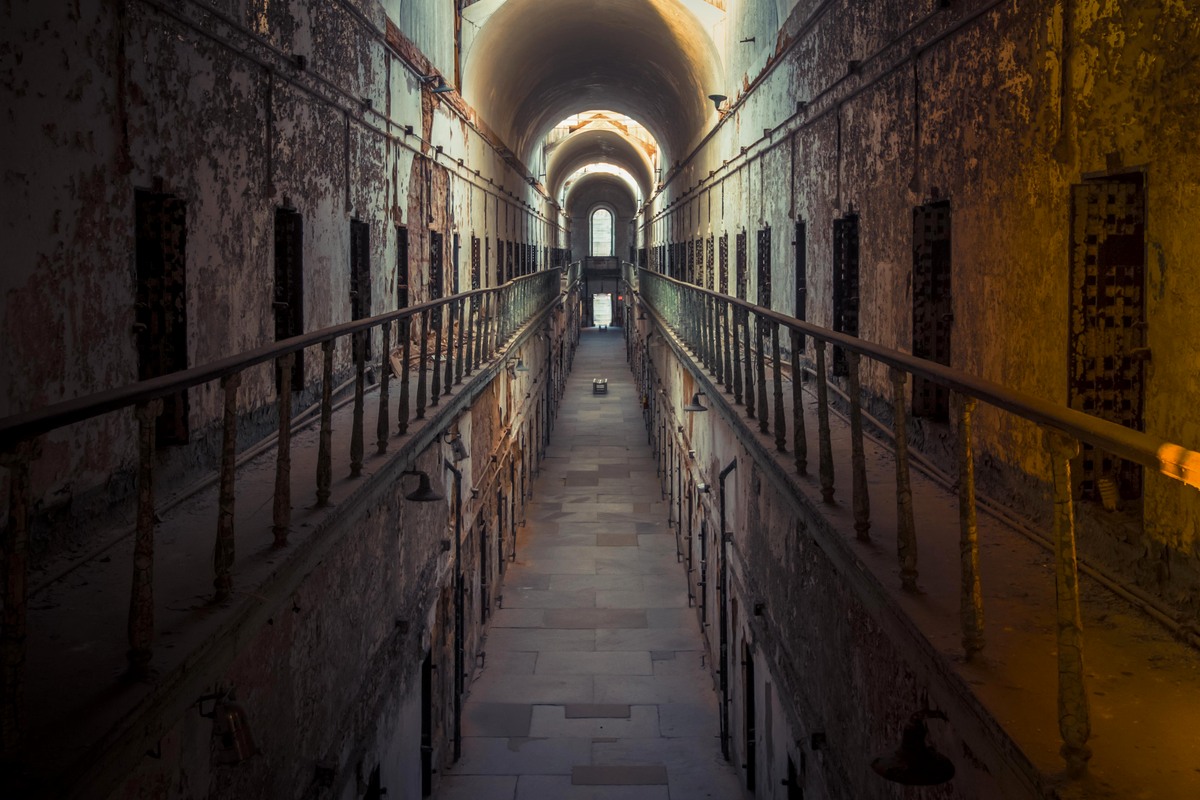
Strong prison photography usually comes from repetition and depth: cell doors, long galleries, shadowed corridors, exercise yards, watch posts and light falling through bars. Plan for low light, but avoid captions that turn the location into an instruction manual. A good image can show atmosphere without showing how someone entered.
If official tours or controlled photo days exist, they are usually the safest way to document a former prison. For private notes, use the Google Earth KML guide to separate confirmed public viewpoints from restricted zones and outdated rumors.
Map notes that keep prison research cleaner
When mapping a former prison, do not just save coordinates. Add status notes, source dates, official links, exterior viewpoints, visible warning signs, tour availability and redevelopment updates. This makes the map useful without encouraging risky entry.
Simple KML labels for prison research
- Green: official tour, public museum area, exterior viewpoint or permission-based access.
- Yellow: status unclear, old reports conflict, ownership changed or redevelopment is pending.
- Red: fenced, monitored, sealed, active construction, no-trespass signage or unsafe cell tiers.
- Grey: demolished, converted, fully redeveloped or not useful for current route planning.
CTA: build safer abandoned-place routes
FAQ: abandoned prison urbex
Is it legal to enter an abandoned prison?
Usually no, unless there is permission, a tour, a permit or another clear legal basis. A closed jail or prison remains owned property.
Are abandoned prisons good for beginners?
Not usually. The layouts are restrictive, the legal status is often strict, and the buildings may include cell tiers, basements, heavy doors and monitored perimeters.
Should I share exact prison coordinates?
Share carefully. Public heritage sites are different from restricted ruins, but access points, weak doors and security details should stay private.
What should I check first?
Check current ownership, official access policy, redevelopment status, recent exterior evidence and whether the site has memorial or heritage protections.
Final thought
Former prisons can be visually powerful, but they need a slower and more respectful research method. Treat legal status as the first filter, keep sensitive details private, and let the story of the place matter as much as the photograph.