
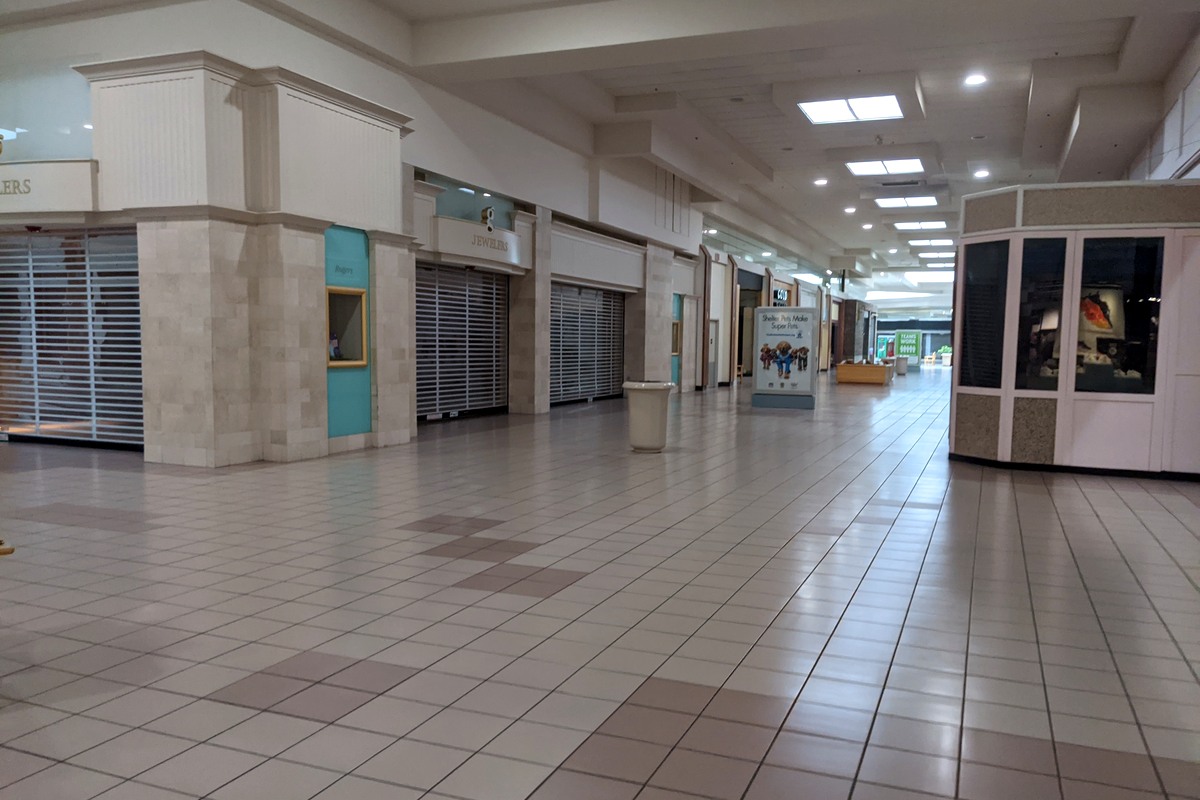
Abandoned mall urbex sits between nostalgia, architecture and practical risk. Empty food courts, silent escalators, old anchor stores and skylit atriums can look cinematic, but dead malls are rarely simple “empty public places”. They are usually private commercial properties with changing ownership, active security, redevelopment plans, fire-damaged zones or partial tenants nearby.
This guide is for research and planning, not for publishing access points. Use it with the urban exploration legality guide, the urbex etiquette rules and the Google Earth KML planning workflow. The goal is to verify status, avoid stale location lists and treat fragile retail spaces responsibly.
Why dead malls need a different research method
A factory or rural house may sit untouched for years. A mall can change in weeks. One wing may be closed while another is used for storage. A cinema can reopen independently. A parking deck can be owned separately. Redevelopment crews, film permits, security patrols and demolition contractors may appear long before the public notices. That makes old urbex posts, TikTok clips and photo albums unreliable unless you cross-check them against current evidence.
| Mall signal | What it can mean | Responsible check |
|---|---|---|
| Empty storefronts | Decline, renovation, seasonal closure or planned redevelopment | Compare recent photos, tenant directories and local news |
| Open parking lot | Could still serve offices, cinemas, security or construction | Do not treat parking access as building permission |
| Boarded entrances | Trespass risk, vandalism response or active hazard control | Stay exterior-only unless permission is documented |
| Old viral videos | May predate demolition, sealing, arson or redevelopment | Verify the month and year, not just the location name |
Pre-checklist before adding a mall to your route
Start with the current property status. Search the mall name with terms like sale, receiver, demolition, redevelopment, permit, fire, roof collapse, code violation, security and tax auction. Then compare satellite imagery, street-level views, recent local articles and public planning-board documents. A mall that looks abandoned on a 2022 video may be an active construction site in 2026.
Abandoned mall research checklist
- Confirm ownership: malls often pass through banks, receivers, developers, municipalities and holding companies.
- Check active tenants: gyms, clinics, offices, cinemas, churches or storage units can stay open inside a “dead” complex.
- Look for permits: demolition, asbestos abatement, roofing, fire remediation and redevelopment permits change access and risk.
- Separate exterior photos from entry: legal public viewpoints are not the same as permission to enter corridors, service tunnels or roof areas.
- Verify recency: give more weight to current news, recent public records and fresh exterior evidence than old viral videos.
Mall-specific safety risks
Dead malls look spacious, but their hazards are spread across large areas. Roof leaks weaken ceiling grids and terrazzo floors. Escalators, elevators and service corridors can hide drops or electrical risks. Food courts may contain mold, grease residue and broken glass. Parking decks can be more dangerous than the mall itself because water, salt and freeze-thaw cycles attack concrete over years.
- Avoid escalators, elevators and service shafts. They are not shortcuts and can fail without warning.
- Do not climb roofs, skylights, atrium ledges or parking ramps. Mall architecture creates tempting vantage points but serious fall exposure.
- Treat flooded corridors as a stop sign. Water can hide holes, electrical hazards, sewage and unstable flooring.
- Watch for human risk. Security, scrappers, vandals, shelter use and active contractors can all be present in the same complex.
- Keep the plan simple. Large malls are easy to get turned around in; mark legal exterior points and exits before any shoot.
How to plan dead-mall photography without exposing access
Great mall photography usually comes from scale and light: long corridors, atriums, skylights, anchor-store facades, closed kiosks, food courts, old signage and reflections. You can plan those shots from legal exterior research first. Note sun direction, safe public sidewalks, parking-lot sightlines and building angles. If a location offers official tours, film permits or redevelopment open days, that is always cleaner than guessing access from social media.
When publishing photos, remove access details that make the site easier to vandalize. Avoid showing forced entry, broken panels, open service doors, exact coordinates or timing patterns for patrols. For technique, pair this topic with the urbex photography tips guide; for behavior, keep the etiquette guide as the baseline.
Using maps and KML for abandoned mall research
Maps are useful for route planning, not for bypassing rules. Build a KML folder with candidate malls, public viewpoints, nearby parking, current redevelopment notes, exterior-photo angles and “do not enter” warnings. Color-code candidates by confidence: active/redeveloped, exterior-only, permission required, demolished, or still uncertain. This keeps the route practical without turning it into a public access leak.
Simple KML labels for dead malls
- Green: legal exterior viewpoint or official public access.
- Yellow: status unclear, needs fresh verification before travel.
- Red: fenced, monitored, active demolition, fire damage or explicit no-trespass signage.
- Grey: demolished, redeveloped or no longer useful for the route.
CTA: build safer abandoned-place routes
FAQ: abandoned mall urbex
Is it legal to enter an abandoned mall?
Usually no, unless you have permission, a permit, an official tour or another clear legal basis. Most abandoned malls are private property, even when they look empty.
Are dead malls safer than factories?
Not necessarily. Malls can hide roof damage, flooded service areas, unstable escalators, broken glass, mold, weak parking decks and active human risk across a very large footprint.
Should I publish the exact location of an abandoned mall?
Be careful. Famous dead malls may already be public, but access details, open doors, patrol timing and coordinates can increase vandalism, theft and unsafe visits.
What is the best first step for abandoned mall research?
Verify current status. Search the mall name with redevelopment, demolition, fire, permits, security, tax sale and local planning terms before trusting old urbex content.
Final thought
Dead malls are powerful urbex subjects because they show public memory at commercial scale. The responsible approach is slower: verify ownership, choose legal viewpoints first, avoid exposing vulnerable access, and treat every old list as a lead to check rather than proof that a place is safe or open.