
Abandoned theater urbex is attractive because old cinemas, stages and movie palaces keep visible traces of public life: balconies, projection rooms, velvet seating, painted ceilings, foyers and backstage corridors. But those same details often mean heritage value, active ownership, restoration campaigns or heavy structural risk.
This guide is for research and planning, not for sharing access points. Pair it with the urban exploration legality guide, the urbex etiquette rules and the urbex photography tips. The goal is to verify status, protect fragile interiors and avoid turning a cultural site into a target.
Why theaters need a different research method
An abandoned factory may be judged by industrial remains. A theater is also judged by memory: local shows, community events, architecture, murals, movie nights and restoration hopes. A building can look abandoned while a nonprofit is fundraising, a city is negotiating redevelopment, or a private owner is securing the auditorium for future use.
| Theater signal | What it can mean | Responsible check |
|---|---|---|
| Boarded marquee | Vacancy, fire damage, code work or a paused renovation | Check local planning, preservation and ownership updates |
| Open lobby photos | Old access, official tour, break-in or temporary contractor opening | Verify date and permission context before trusting it |
| Balcony or fly loft visible | High fall exposure and deteriorated timber or rigging | Do not climb stage systems, catwalks or balcony edges |
| Central downtown location | Busy street frontage, cameras, neighbors and active security | Treat exterior research as the default unless access is official |
Research checklist before adding a theater to a route
Search the venue name with restoration, fire, demolition, sale, receivership, heritage register, city council, permits, roof repair, asbestos and fundraising. Then compare the date of photos or videos with current exterior evidence. A theater that appears open in an old post may now be sealed, partially demolished or under active restoration.
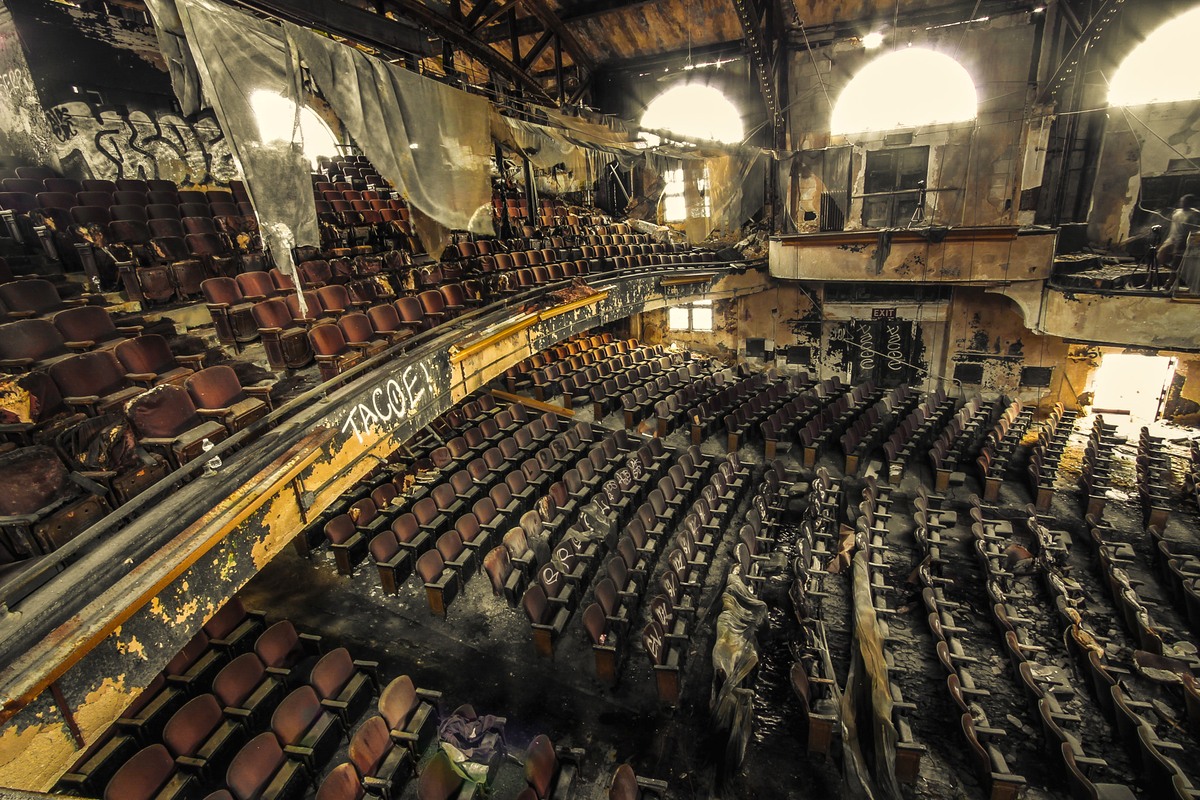
Abandoned theater research checklist
- Confirm the current owner: theaters often pass between cities, nonprofits, developers and preservation groups.
- Check restoration status: fundraising, permits or heritage protections can make a site active even when it looks empty.
- Separate public exterior views from entry: a visible marquee or open sidewalk does not mean interior permission.
- Flag stage hazards: orchestra pits, fly systems, catwalks, balconies, old stairs and projection booths need extra caution.
- Protect access details: do not publish doors, roof routes, gaps, timing or exact weak points.
Theater-specific hazards
The biggest risks are often vertical. Balconies, boxes, stage pits, fly lofts, rigging grids and projection rooms were designed for controlled use, not decay. Water damage can weaken plaster ceilings and seating decks. Darkness also matters: a theater can look navigable until a missing stair, open pit or collapsed aisle appears at your feet.
- Do not climb balconies, catwalks, lighting bridges or rigging. Old stage hardware can fail without warning.
- Stay away from orchestra pits and stage traps. They can be hidden in low light or covered by weak material.
- Avoid touching curtains, seats, props or projection equipment. They may be fragile, contaminated or part of a protected interior.
- Watch for active restoration signs. Fresh materials, tools, barriers or paperwork mean the site is not simply abandoned.
- Leave if you encounter alarms, workers, neighbors, security or event use. Many theaters sit in visible downtown areas.
Planning low-light photography responsibly
The strongest theater images usually come from symmetry: rows of seats, the proscenium arch, balcony lines, foyer staircases, projection windows and soft natural light through damaged roofs or doors. Plan exterior angles first, then mark possible public viewpoints, sun direction and safe tripod positions. If tours, permits or owner-approved visits exist, they are cleaner and safer than guessing from old social posts.
When publishing, avoid showing entry routes or current security blind spots. Focus captions on architecture, history and preservation rather than “how to get in”. If you need a broader route workflow, use the Google Earth KML guide to organize notes without exposing the building.
Using maps and KML for theater research
For theaters, KML notes should separate research value from access. Mark legal exterior viewpoints, heritage-status links, current restoration news, demolition permits, public parking, nearby active businesses and no-entry warnings. This helps you build a responsible route without treating the map as permission.
Simple KML labels for abandoned theaters
- Green: public exterior viewpoint, official tour, open heritage event or permission-based access.
- Yellow: restoration unclear, ownership unclear or old reports need fresh verification.
- Red: fenced, alarmed, active construction, unsafe stage areas or explicit no-trespass signage.
- Grey: demolished, converted, fully redeveloped or not useful for the current route.
CTA: build safer abandoned-place routes
FAQ: abandoned theater urbex
Is it legal to enter an abandoned theater?
Usually no, unless you have permission, a permit, an official tour or another clear legal basis. A closed theater is still owned property, even if the marquee looks forgotten.
Are abandoned theaters safer than factories?
Not automatically. Theaters add balconies, stage pits, rigging, dark staircases, weak plaster ceilings and projection rooms to normal decay risks.
Should I publish the exact location of an abandoned theater?
Be careful. Some famous theaters are public knowledge, but access details, open doors and security timing can increase vandalism and harm restoration efforts.
What is the best first step for theater research?
Verify current status through local news, planning-board records, heritage groups, owner statements and recent exterior evidence before trusting old urbex content.
Final thought
Abandoned theaters deserve a slower approach because they are often both fragile buildings and cultural memory. Research ownership, keep access details private, prefer official or exterior viewpoints, and let the photography show the place without making it easier to damage.